
Oct 12, 2026
Quiet Luxury and Underconsumption in Experiential Marketing
hamilton
Quiet luxury and underconsumption are reshaping experiential marketing by shifting focus away from excess and toward intention, clarity, and emotional resonance. Brands that design experiences with restraint often create stronger engagement, longer dwell times, and more meaningful connections.
For years, impact often meant visibility at all costs. Recently, a different design language has begun to surface across fashion, interiors, and brand environments. Quiet luxury and underconsumption have entered the cultural conversation, not as trends rooted in austerity, but as responses to saturation.
Why Audiences Are Drawn to Quiet Luxury and Underconsumption
Together, the ideas represented by quiet luxury and underconsumption reflect a broader cultural fatigue with constant stimulation and performative excess. Audiences move through environments saturated with messaging every day. Trade show floors, conferences, and brand activations frequently compete for attention through volume. Spaces that feel calm, deliberate, and human tend to stand out.
Psychologically, restraint creates room for presence. When an experience removes unnecessary friction, visitors feel invited to slow down. Calm environments encourage curiosity rather than defense. People linger longer in spaces that respect their attention rather than demand it.
Quiet luxury means choosing purposeful elements. Materials feel considered. Transitions feel smooth. Messages arrive with confidence, not urgency. The brand communicates trust by not overexplaining itself. Underconsumption reinforces trust. When brands show restraint, audiences often perceive integrity.
Rethinking What Impact Looks Like in Brand Experiences
The impact of experiential marketing is often measured through metrics such as foot traffic, impressions, and social reach. Those indicators matter, but they rarely tell the full story. Quiet luxury reframes impact as something felt.
A calm, intentional environment can produce stronger engagement than a louder neighbor on the show floor. Visitors who feel comfortable tend to stay longer. Longer dwell times allow for deeper conversation. Deeper conversation leads to understanding, not mere surface awareness.
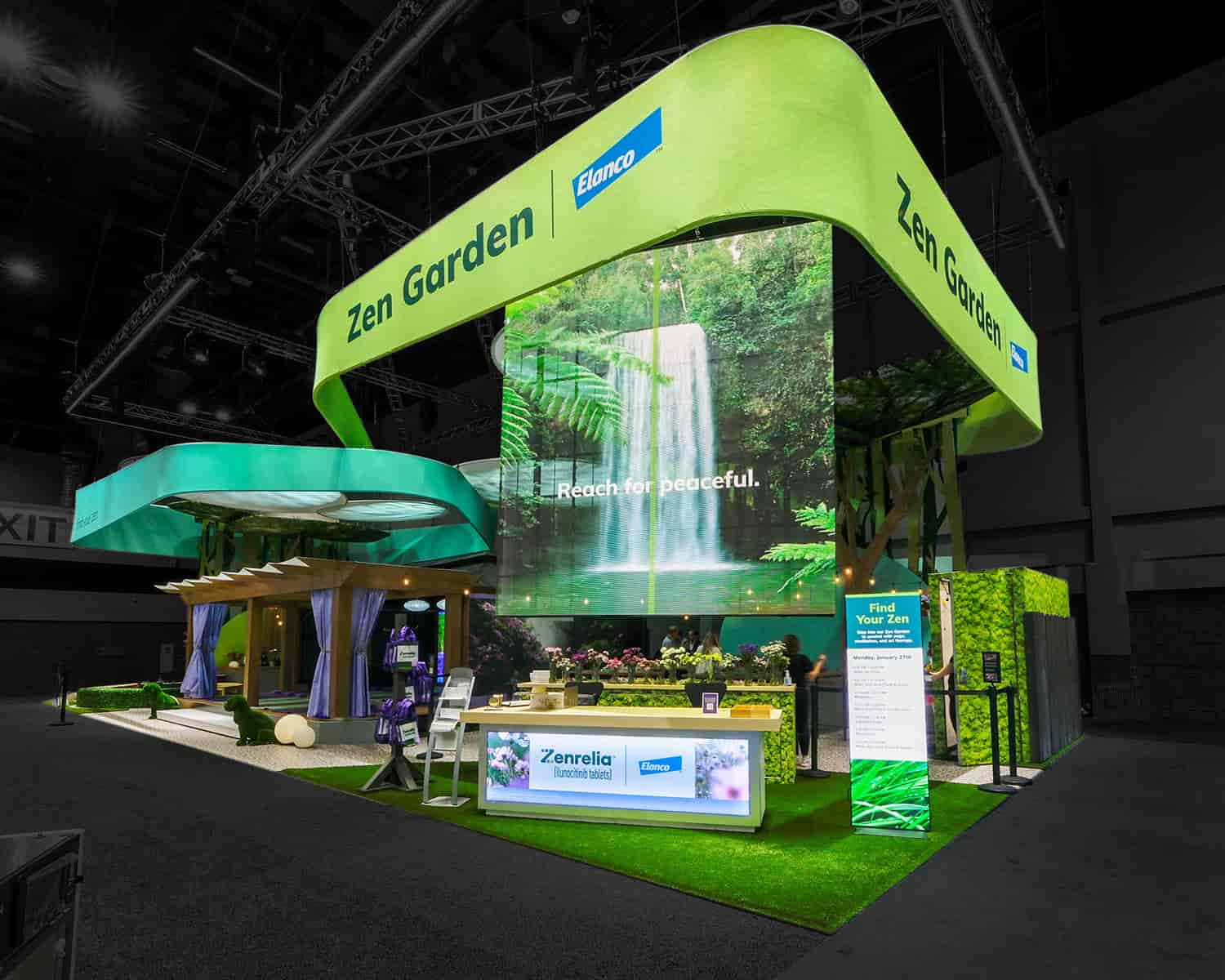
In 2025, Hamilton partnered with Elanco to design a Zen Garden relaxation area. The environment invited visitors into a slower rhythm. Natural textures, comfortable flooring, and subtle elevation shifts supported a sense of grounding. The curated atmosphere encouraged longer stays and more meaningful interaction without relying on spectacle. Impact grows when visitors associate a brand with clarity, comfort, or confidence.
Designing Experiences That Feel Considered, Calm, and Purposeful
Designing for quiet luxury requires restraint in execution. Fewer elements place more weight on layout, material quality, and proportion.
Spatial flow plays a central role. Defined zones help visitors understand where to pause, engage, or move on. When people instinctively know how to navigate a space, stress decreases and openness increases. Material selection carries emotional weight. Natural finishes often evoke warmth and authenticity. Soft textures invite touch. These cues work together to create environments that feel trustworthy and grounded. Lighting and sound deserve equal attention. Even diffused lighting supports calm. Controlled acoustics reduce fatigue. Small adjustments can transform a space from overstimulating to restorative.
Underconsumption reinforces all of this by encouraging reuse and adaptability. Modular components, durable materials, and thoughtful fabrication choices support longevity. Experiences feel intentional rather than disposable, aligning with brand values and fostering environmental and cultural awareness.
How Hamilton Helps Brands Meet the Moment
At Hamilton, experiential marketing attunes to and responds to cultural shifts rather than chasing trends. Quiet luxury and underconsumption create an opportunity to design environments that respect attention while still delivering performance. Brand values, audience mindset, and emotional goals shape early decisions, guiding how the space should behave and how visitors should feel. The result is experiential marketing that supports conversation and environments that encourage presence.
Hamilton is a full-service experiential and event marketing agency with a 75-year legacy creating immersive brand experiences for companies throughout North America and around the world. We design, produce, and execute integrated experiences – exhibits, events, environments, mobile, and digital solutions – that drive meaningful connections between your brand and your audience.
Contact Hamilton today to explore how intentional, purpose-driven experiences can create deeper connections.
Newsletter Signup
Sign up to receive exclusive updates from Hamilton and resources on event marketing, exhibit strategy, and experiential technology.
Newsletter Signup
Sign up to receive exclusive updates from Hamilton and resources on event marketing, exhibit strategy, and experiential technology.